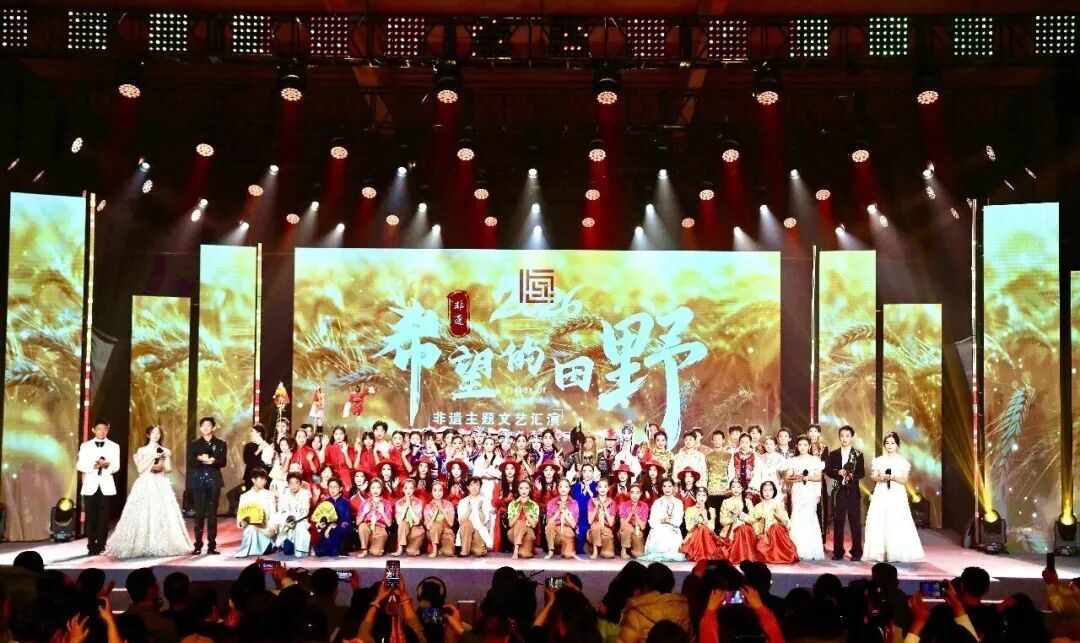
Heritage, But Make It Loud: The 2+1 Showcase Puts Intangible Culture on a School Stage

The programme read like a museum wall and moved like a concert. Every act in this year’s middle school showcase carried the name of a national intangible cultural heritage item and, next to it, the number it holds on the official register. Beijing storytelling is number V-57. Chaoyang and Puning Yingge dance is III-8. Stick-puppet opera is IV-92. Then the lights went down and a fourteen-year-old hit a drum.
This is the annual “2+1” project showcase, held on the Haidian campus this month. The “2+1” is the school’s own addition to the national curriculum: across three years of middle school, every student is expected to take up two sports and one art seriously enough to perform them. The showcase is where that promise has to stand up in front of an audience.
A register number instead of a hashtag
The framing was the clever part. Heritage programming in schools often drifts towards costume and photo opportunity; here the items were named precisely, attributed to the places and communities they come from, and dated to the batch in which they entered the national list. A student narrating the show was, in effect, annotating it.
That choice does two things at once. It treats the material as somebody’s living practice rather than school decoration, and it gives teenagers a way into it — a numbered list is a familiar format for anyone who has ever scrolled a catalogue.
Drums first
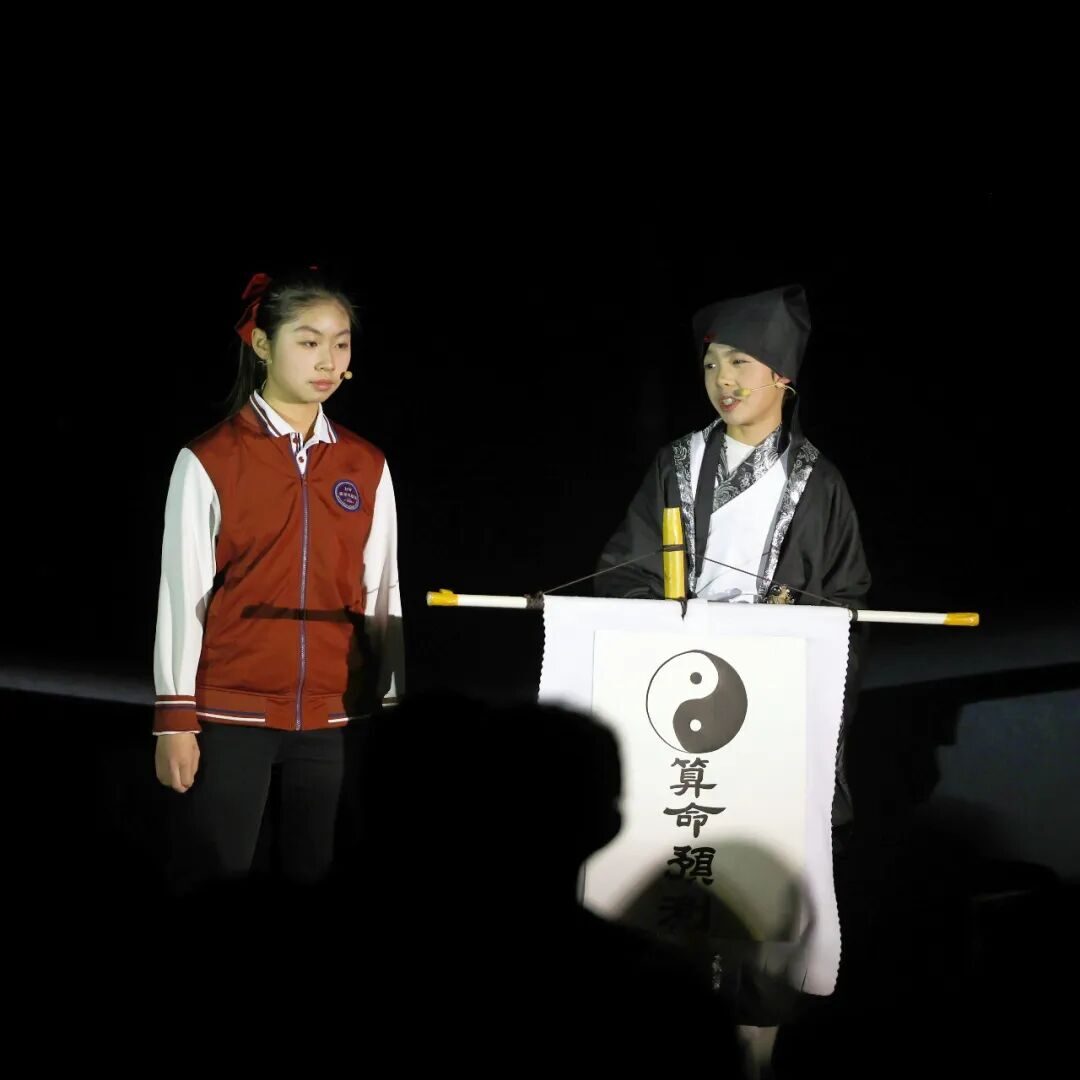
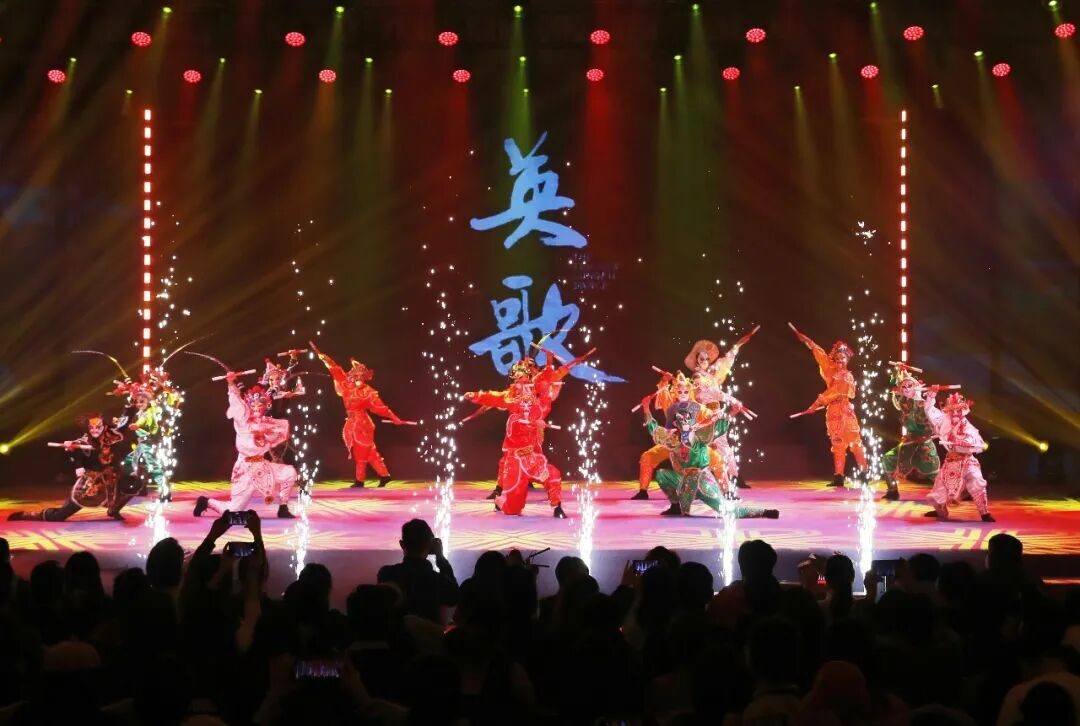
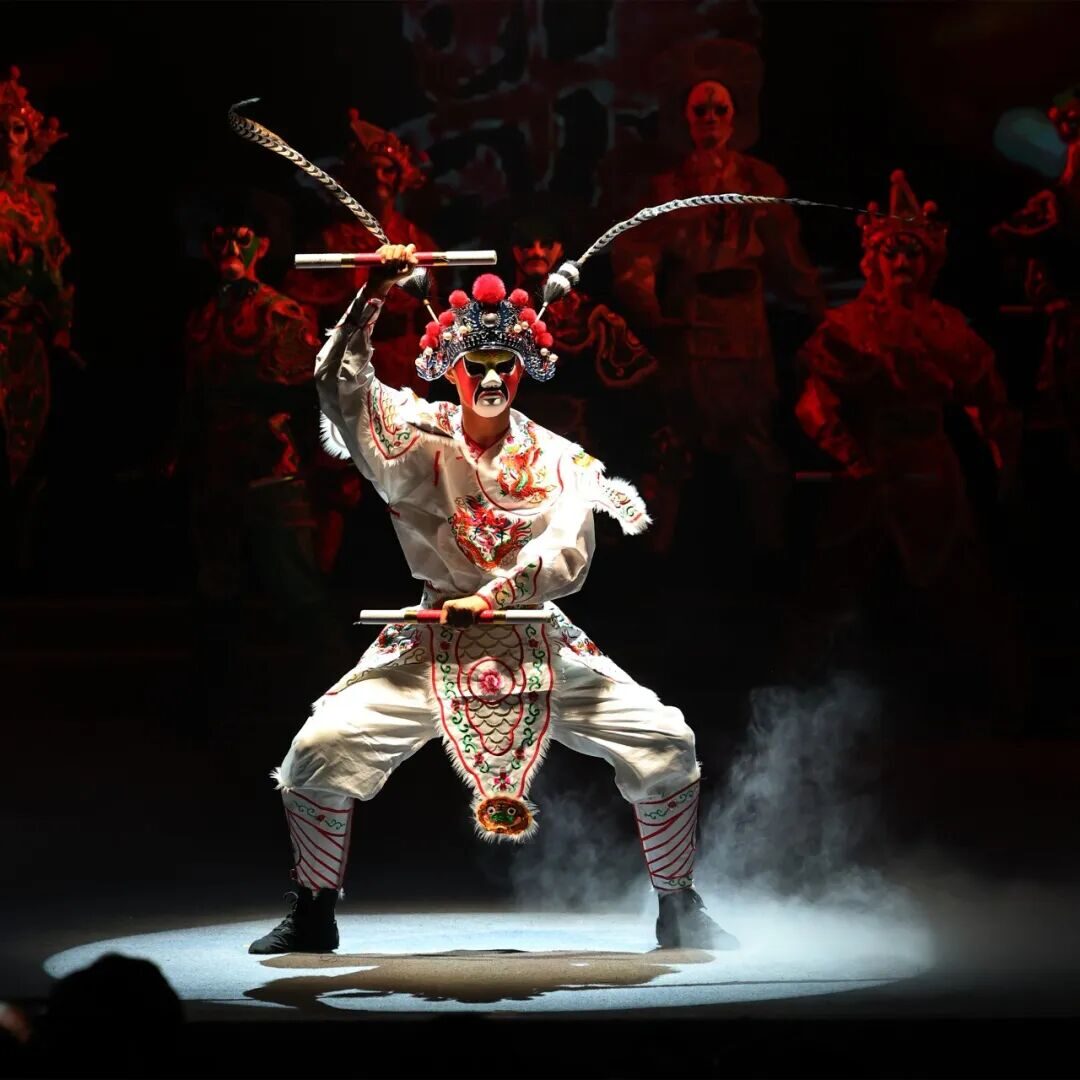
The opening sections were built for volume. Sun Chenhao’s storytelling piece set the convention — a single performer holding a hall — before the men’s dance elective took the stage with Yingge, the drum-and-stick dance from Chaoyang and Puning in Guangdong that is usually performed in the street, at festival scale, by adults in full paint. Stripped to a school stage and drilled into a class of Year 9 boys, it lost nothing. If anything the tempo got sharper.
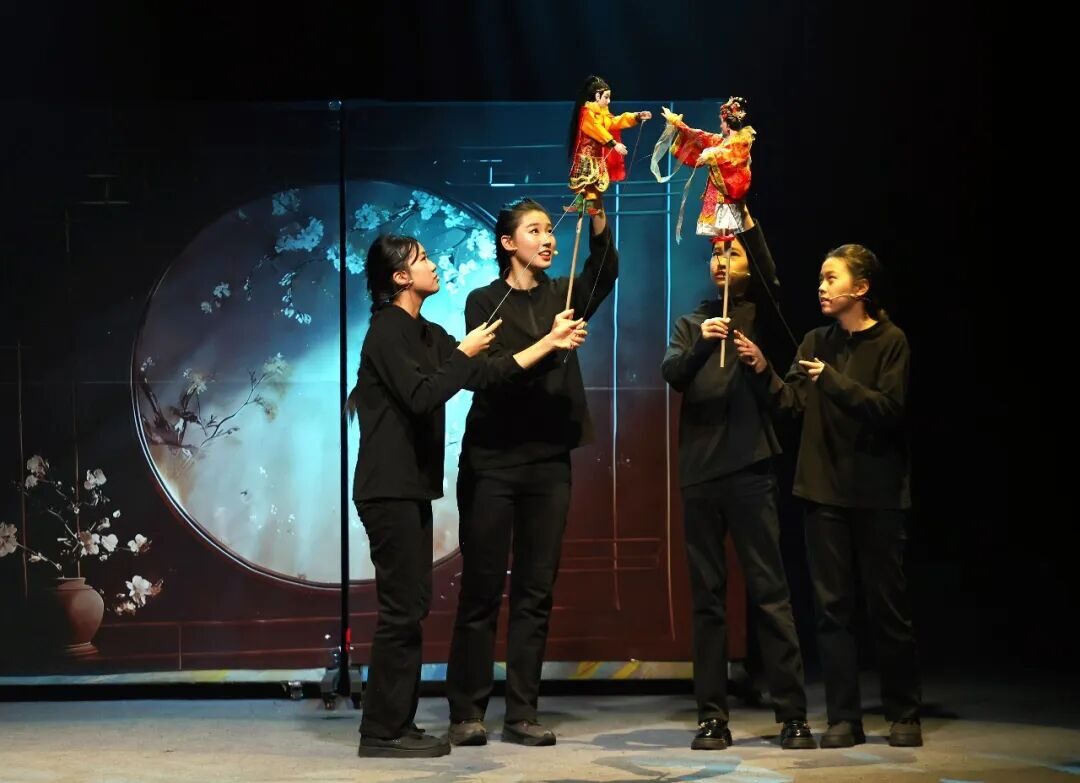
From there the show ran through the map: a Yi folk song from the southwest, sung as a chorus by the vocal elective; the stick-puppet opera Three Kingdoms, in which the puppeteers are visible, in black, working the rods; a dance built on the costume craft of the Huayao Dai; and a spoken piece that walked the Silk Road through the Changsha Tongguan kilns, the Dunhuang murals and the making of xuan paper.
Where the sport curriculum earns its keep
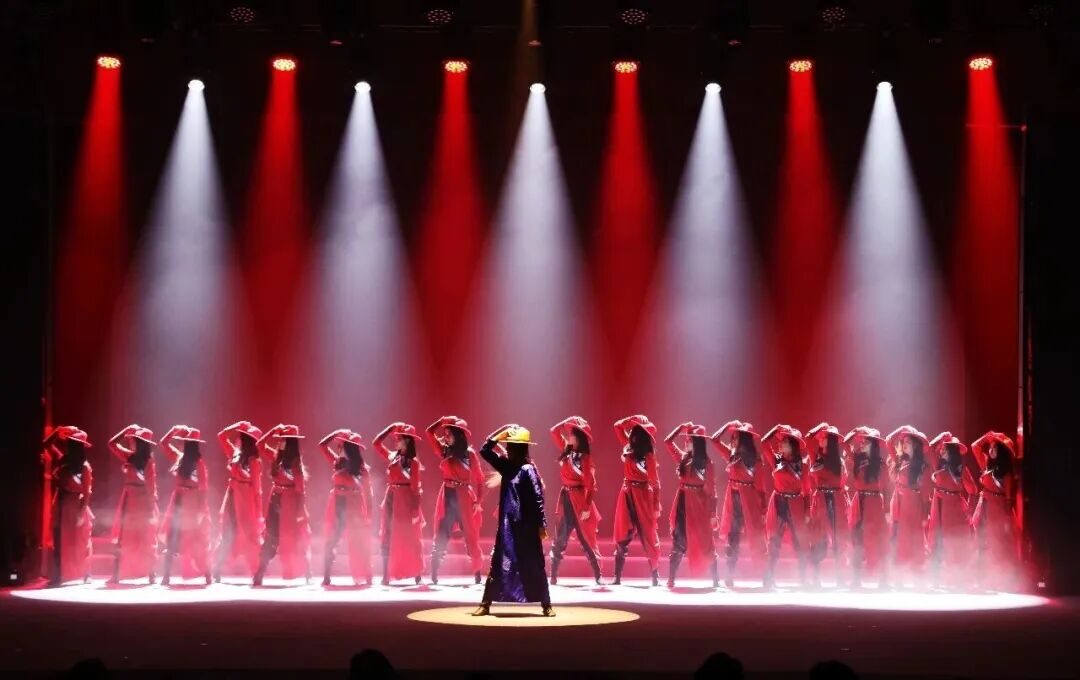
The middle chapter was the one that justified the “2+1”. A single sequence stitched together Choy Lee Fut boxing, taiji and competitive rope skipping — three register items, one routine, all of it delivered by students who had spent the year acquiring the movement vocabulary. The same block brought a Peking-opera scene of Mu Guiying breaking the Tianmen formation, with a student singing the role; a morin khuur solo, The Horizon, danced by a classmate; and a Sauran dance from the Mongolian northwest.
Put a martial art, an opera aria and a Mongolian dance in the same half hour and the argument makes itself: these are physical skills, not exhibits. They need a body in condition and a teacher with patience, which is precisely what a school sports and arts programme is supposed to supply.
The quiet third act
The final chapter slowed down and widened out. A spoken piece on Suzhou embroidery, paper-cutting, shadow puppetry and tie-dye put craft at the centre; a choir sang the Korean folk song Arirang; a violinist played the Butterfly Lovers concerto while a recent graduate and a current student danced it; two boys did a comic routine about heritage; and the Chinese orchestra closed with Horse Racing, the erhu showpiece that every parent in the hall knows by heart.
It ended with Field of Hope, danced by the arts-track students of Years 9 and 10 on a stage dressed as wheat, drawing on the Jiaozhou and Guzi yangge traditions of Shandong. Six hosts, a full house, and a title that had been running through the whole evening: the field is where things are grown, and heritage is a crop that has to be replanted each generation.
Why it reads as new
Nothing about this bill is trendy in the way a marketing team would use the word. There is no remix, no projection mapping over a drum circle, no attempt to make Yingge sound like pop. What makes it feel current is authorship: teenagers performing material that belongs to specific places, at a standard that assumes the audience can tell the difference.
The question the hosts left the hall with was deliberately small. Which act did you like best, and which of the two sports and one art did you pick this year? Around the foyer afterwards, the answers were loud and mostly about the drums.